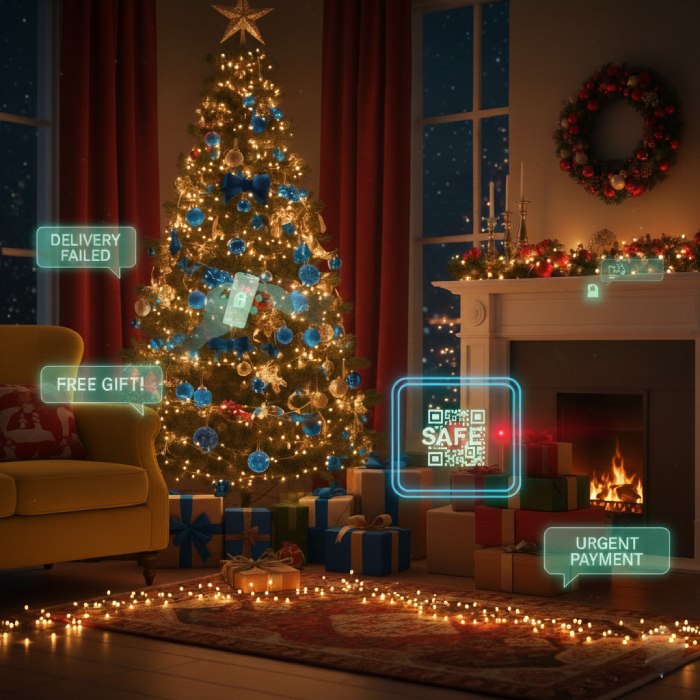
12 Scams of Christmas
The holidays are usually a time of joy and togetherness, with lots of shopping and giving. Unfortunately, criminals know this and each year they launch seasonal schemes designed to steal money, personal information and even your identity.
Here are 12 common scams at this time of year.
1. Package Delivery & Shipping Notification Scams
Scammers exploit the high volume of online shopping by sending fake delivery notifications via email, text, or social media messages. They often claim a package is “delayed,” “failed to deliver,” or requires urgent confirmation. In some cases, they even request a small “reshipping fee” that is never legitimate.
2. Fake Online Stores & Holiday Deal Scams
Fraudsters create seemingly realistic websites and social media ads offering deep discounts on popular items such as electronics. Some sites are designed solely to steal credit card information, while others simply take your money and never deliver the product.
3. Gift Voucher Scams (Physical & Digital)
Scammers exploit the popularity of gift vouchers during the holidays. Physical scams often involve selling pre-loaded vouchers that have already been used or never existed. Digital scams may require “activation fees” that are fraudulent or promise free or discounted vouchers in exchange for personal information.
4. Fake Charity & Donation Scams
Holiday giving is exploited through fake charities or phishing emails purporting to be reputable organisations. Scammers create urgent stories around disasters or charitable campaigns, prompting immediate donations. They may also replicate legitimate charity names or websites to appear authentic.
5. Payment Scams
Scammers target popular payment methods like wire transfers or even apps, asking users to send money for fake sales or gifts. Since these payments are harder to recover or irreversible in some instances, victims may have little recourse once the funds are sent.
6. Fake Tickets & Holiday Event Scams
Fraudsters sell fake or duplicated tickets for holiday events through secondary markets, social media or email. Victims may discover their tickets are invalid only at the event. If the prices on certain tickets seem too good to be true, it probably is, so don’t be duped.
7. Imposter Scams
Criminals impersonate trusted organisations, such as utilities, retailers or banks, claiming there is a problem that needs immediate attention. They often ask for account verification, passwords or even payment information. JN will never ask you for these credentials.
8. Holiday Helper Scams
Criminals target vulnerable individuals by offering unsolicited help with tasks like carrying packages, groceries or even assisting at ATMs. Although they appear friendly and helpful, their real intention is to steal your belongings, cash or personal information, or possibly even harm you.
9. ‘Free Gift’ & Prize Scams
Offers for “free gifts” or prizes are common during the holidays. Scammers often promise a free item but require payment or ask for personal data to claim the prize.
10. Family Emergency Scams
These scams, now being aided by artificial intelligence, target the compassionate nature of families during the holidays. Scammers call or message victims pretending to be close relatives in urgent need of money. They exploit the victim’s concern and desire to help, often requesting secrecy to prevent the victim from verifying the story.
11. Seasonal Job & Side-Hustle Scams
During the season, scammers create job posts promising quick income through temporary positions, delivery jobs, or “side hustles.” They often require upfront fees for “training” or “equipment” and disappear after payment. Fake job postings may also request personal documents which they can use to steal identities.
12. Holiday Phishing Emails & Texts
General phishing scams spike during the holiday season. Emails or texts may appear to come from retailers, banks or delivery services, urging recipients to click links or download attachments.
How to Stay Safe This Holiday Season
While scams come in many forms, there are some consistent strategies to protect yourself:
- Verify independently – Access accounts and services directly through official apps or websites.
- Pause before acting – Scammers rely on urgency. Take a moment to evaluate before taking action.
- Use secure payment methods – Use trusted websites. Also consider credit cards or payment platforms with fraud protection.
- Enable multi-factor authentication (MFA) – Where available, use MFA to protect email, payment and financial accounts to prevent unauthorised access.
- Research before donating or buying – Verify charities through reputable sources and check online reviews for unfamiliar sellers or platforms.
- Monitor accounts regularly – Check bank statements and transaction history daily to catch suspicious activity quickly.
- Educate friends and family – Share knowledge about scams with less tech-savvy relatives to prevent them from becoming victims.
Remember scammers do not take vacations but staying vigilant and informed can help keep your holiday season joyful and secure.

Check out more stories like this

Rising Oil Prices Could Hit Your Household. Here are Five Tips to Help You Save
Consumers are being urged to adopt smarter energy and spending...

Five Ways Women Can Build Stronger Retirement Savings
For many women, retirement planning requires a different level of...

Give to Gain: Nekesha Hines-Brown Finds Hope After Melissa
In the farming community of Burnt Savannah, St Elizabeth, where...