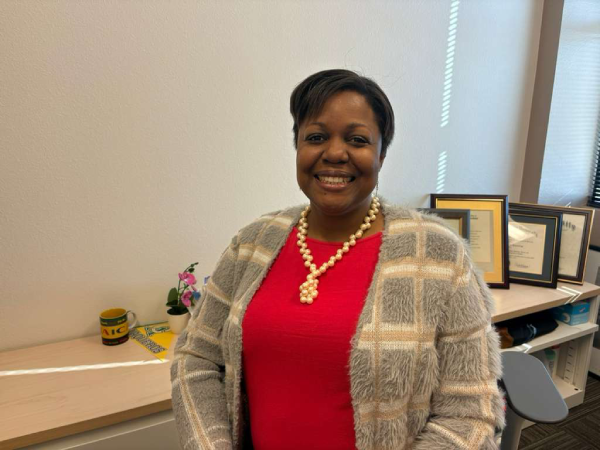
A Shared Calling: Mother and Daughter Unite in the Lecture Hall
As a child, Nneka Reid aspired to follow in her mother’s footsteps in Public Relations (PR). Later, when her mother made the transition to academia, she remembered evenings her mother, then a lecturer at the College of Arts, Science and Technology, now the University of Technology, Jamaica (UTech), graded papers and immersed herself in continuous learning.
Today, Ms Reid, who is a JN Bank member, has followed her mother into academia and, in a rare professional overlap, now collaborates with her to teach modules and courses they have both delivered over the years.
Ms Reid, who has been lecturing since 2006, currently teaches at a community college in the southwestern United States. Her academic career began at UTech Jamaica. At the time, she was settled in corporate life, content with a career shaped by public relations and planning, fields that mirrored her mother’s early professional background.
“I didn’t often see my mother planning lessons,” Ms Reid recalled. “What I saw was her grading, always learning herself, and quietly modelling the discipline of scholarship. Before she taught, she spent years in corporate public relations and administrative leadership, where planning and execution were part of the day to day. Those skills rubbed off on me and led me into PR and planning as well.”
Her transition into teaching came after her mother, Dr Grace Turner, who had started her own academic career as a substitute lecturer before being appointed full time, suggested that she apply for a vacancy published in the Sunday Gleaner.
“When I was enjoying corporate life, she spotted a newspaper advertisement for a communication lecturer in the very department she had worked in,” Ms Reid said. “I scoffed at first, saying teaching was for retirement and that I was too young. But I applied and I was hired.”
The decision placed Ms Reid firmly on a path that mirrored her parents’. Her father also lectured at UTech, Jamaica, making academia something of a family vocation. Still, she insists there was never pressure to follow in their footsteps.
“While growing up, there was no expectation that I would follow her path,” she said. “At home, the message was about finding meaningful work, not copying a job title.”
That freedom, she explained, allowed her to explore different interests before choosing teaching on her own terms.
“I’m honoured that by testing different interests in real settings and ultimately choosing teaching because it matched my values and strengths,” she said. “Lecturers who once knew me only as ‘little Nneka’ in my high school uniform were genuinely surprised to see me return as a colleague. It made the choice feel both personal and full circle.”
For Dr Turner, who lectures at Northern Caribbean University and has lectured at The University of the West Indies, her daughter’s suitability for the role was immediately clear.
“I had no doubt that this was a job Nneka would excel in because of her work ethic and her ability to explain concepts,” Dr Turner said. “Although I suggested that she applied, it would not have changed our relationship if she hadn’t. We have always had a good relationship.”
Over the years, their shared profession has led to direct collaboration. They have co‑taught a seminar and worked together on curriculum development, experiences they both describe as professionally rewarding.
“We brought complementary strengths,” Ms Reid said. “She offered deep institutional knowledge and historical perspective, while I contributed new methods and examples. We set clear roles, stayed open to feedback, and treated disagreements as opportunities to improve the work, not as personal critiques.”
Currently, Dr Turner serves as a guest lecturer each semester in her daughter’s classes, teaching a subject she has delivered since 2002, one she once taught Ms Reid as an undergraduate at Northern Caribbean University.
“Imagine being taught by your mother,” Ms Reid said with a laugh.
The learning, she noted, has been mutual. From her mother, she has gained insight into classroom management, engaging students with different learning styles, and building long‑term academic relationships.
Dr Turner, in turn, credits her daughter with helping her adapt to a changing teaching landscape.
“I have learned from Nneka about new pedagogical tools and digital resources,” Dr Turner said. “More broadly, we have taught each other to remain curious about change and generous with critique.”
Despite the close professional ties, both stress the importance of boundaries.
“We have different personalities, approaches and styles,” Dr Turner said. “I am open to learning from her because, even with experience, I don’t know everything. Being a lifelong learner means welcoming new approaches.”
Ms Reid agrees, noting that clarity has been key to maintaining balance.
“Talk openly about expectations and boundaries early,” she advised. “Treat mentorship as a gift, not an obligation. Accept guidance but make your own choices. Protect family time from becoming a perpetual work meeting and celebrate the shared language and support it gives you. It’s a rare advantage when handled with care.”

Check out more stories like this

When the Call Sounds Legit, But Isn’t
Your phone rings. The caller identifies themself as a representative...

JN Money Partners with WapiPay to Expand Remittance Options to Jamaica
JN Money Services has partnered with fintech company, WapiPay, to...

Don’t Get Caught in the Web! How Fake Websites Are Hooking Victims
More criminals are turning to fake websites and landing pages,...