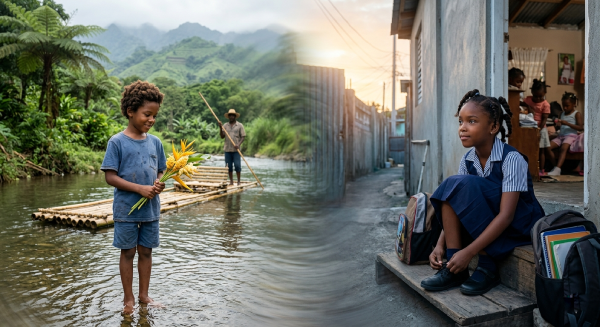
Two Jamaica’s, One Childhood: A Day in the Life of Urban and Rural Childhood
In a rural rafting community of Berrydale District in Portland, the day starts at the river. Before school and chores, children are already absorbing the sights and movement of the water: tourists drifting past on rafts, neighbours greeting each other, and adults turning the shoreline into a workplace. For some families, the river is also a way to earn.
Montel Hill-Bryan, Lead – Driving Academy at the JN Foundation, remembers how he and his brother used to pick yellow marigold flowers and tuck them into a drink bottle and weighing them down with a few pebbles . Then they would swim out to meet the rafts as tourists floated by, presenting the makeshift bouquet with the pride of boys who understood that even a simple gift could carry meaning.
“The tourists were always impressed,” he recalled, often tipping them. Mr Hill-Bryan said the small routine taught him an early lesson about rural survival: you look for opportunities where you are. In a place with few formal jobs and amenities, even a simple idea could bring in money.
At home, Mr Hill-Bryan said his mother set the tone: steady care, close supervision and a strong sense of looking out for others. He links that approach to rural life, where relatives and neighbours often share space and children grow up under watchful eyes.
His grandparents reinforced those ideas through everyday talk. His grandfather called bananas “green gold”, a reminder that land and farming could sustain a family.
In Vineyard Town, Kingston, Angela Walk (name change to protect identity), a JN Group member, said her weekdays ran on the clock. She awoke at 4 a.m. for an 8 a.m. start, helped her mother with breakfast, and got her siblings ready before heading to school. The city offered more services and entertainment, she said, but it also demanded more planning and, for her, more responsibility at home.
After school, she moved into another shift, homework, and then helping oversee two younger siblings, starting dinner, tidying up, and checking that their assignments were done before her mother returned.
On weekends, she sometimes went to her grandmother’s house and played Scrabble “as a way of building my vocabulary”. Other days she stayed in the neighbourhood for hide-and-seek, “stucky and pulley”, and bicycle races.
Together, their accounts show how daily life can diverge for Jamaican children based on where they grow up. In rural Portland, Mr Hill- Bryan’s memories centre on the outdoors, informal ways of earning, and adults teaching values through land and community. In Kingston, Miss Walk’s routine is defined by early mornings, school schedules, and helping to run a household, balanced by neighbourhood games and family visits.
Miss Walk said she associates country childhood with more daily contact with nature and tighter community networks, even if conveniences are farther away. She pointed to activities she connects with rural life: marble games, cricket, fishing at the pond, animal caretaking and using the river for washing. In town, she said, schools, shops and entertainment are closer, but time was more structured.
Mr Hill-Bryan credits rural life with teaching empathy and generosity, and city life with reinforcing standards and resilience. The contrast, he said, is not just scenery; it is the kind of childhood a place produces.
He believes rural communities can benefit from more structure and accountability, while urban spaces could use more compassion and “humanity”. For children, the difference can be as basic as what wakes them up: a flowing river or an alarm set hours before sunrise.

Check out more stories like this

When the Call Sounds Legit, But Isn’t
Your phone rings. The caller identifies themself as a representative...

JN Money Partners with WapiPay to Expand Remittance Options to Jamaica
JN Money Services has partnered with fintech company, WapiPay, to...

Don’t Get Caught in the Web! How Fake Websites Are Hooking Victims
More criminals are turning to fake websites and landing pages,...